Timber Windows & Doors in Winsford Ex-Council Houses: Repair vs Replace When Draughts & Decay Set In
Draughty timber windows or a sticking door in Winsford or Northwich? We explain when repair beats replacement and when it doesn't. Honest local advice.

Repair or Replace? The Question Every Winsford Homeowner Eventually Asks
Timber windows and doors are a common sight across Winsford, Northwich and the surrounding villages. Older semis in Winsford, terraced streets in Middlewich, 1930s bay-fronted houses in Hartford and Davenham, a huge amount of the housing stock here was built with softwood frames, and a lot of that timber is still doing its job decades later. The question we get asked regularly is: should I repair what I've got, or is it time to replace it altogether?
There is no single answer. It depends on the condition of the timber, what the problem actually is, and what you want the end result to look like. What we can do is walk you through the real considerations so you can make an informed decision rather than a panic one after a bad winter.
What We Actually Mean by "Timber Window and Door Repairs"
As carpenters and joiners, we work on the timber elements of windows and doors. That covers a wide range of problems:
- Draughts and rattling frames. Often caused by shrunken or warped timber, failed draught seals, or a sash that no longer sits flush in its frame.
- Sticking or dropping doors. Timber moves with moisture and temperature. A door that sticks in summer and rattles in winter is usually a fitting problem, not a structural one.
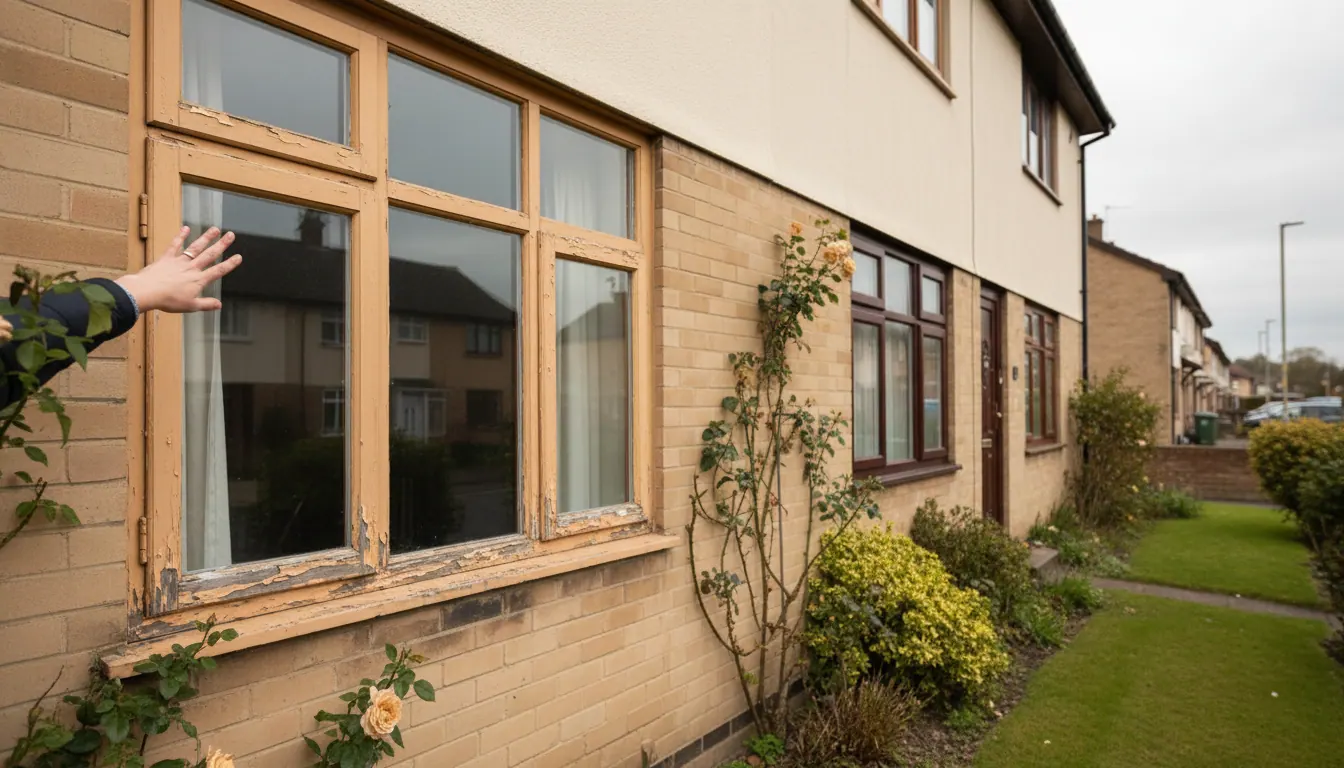
- Rot in the frame or sill. This is the big one. Surface rot can often be cut back and repaired with a proper splice or a quality filler system. Deep rot that has reached the structural core of a frame is a different matter.
- Broken sash cords. A classic problem in older Winsford and Northwich properties with traditional sliding sash windows. Replacing the cords and rebalancing the weights is straightforward joinery work.
- Damaged or missing beading. The thin timber strips that hold glass in place can split or fall away. Replacing them is a small job that makes a real difference to security and weather tightness.
- Dropped or misaligned frames. If a frame has shifted in the opening, the window or door won't operate properly. This can sometimes be corrected without a full replacement.
The key point: many of the faults people assume mean "replacement" are actually repair jobs. A skilled joiner can extend the working life of a timber frame significantly if the core timber is still sound.
When Repair Is the Right Call
Repair makes sense in several situations.
If the frame is structurally solid but the surface has weathered, a combination of cutting out the soft material, treating the exposed timber and making good with a suitable repair system will bring it back. Done properly, this lasts well, particularly if the frame is then repainted and maintained on a reasonable cycle.
If the problem is a single component, a rotten sill, a broken sash cord, a hinge that has pulled away from the frame, there is no reason to replace the whole unit. We can address the specific fault and leave everything else intact.
Period properties are another strong case for repair. A lot of homes in Hartford, Sandiway and the older parts of Winsford have original timber windows that give the house its character. Replacing them with modern units can alter the look significantly and, in some cases, cause problems with planning if the property is in a conservation area or is listed. Repairing and restoring the original frames keeps the character and avoids those complications.
When Replacement Makes More Sense
There are situations where repair is not the sensible option.
If the rot has gone deep into the structural timber of the frame, cutting it out and making good is not a lasting solution. You end up repairing the repair within a few years. A full replacement is the more honest answer.
If the frames are in poor condition across the whole house, individual repairs become a rolling programme that never ends. At that point, a planned replacement can make more practical sense.
If the window or door is a standard size and a modern replacement unit is available off the shelf, the cost and disruption of a complex repair can sometimes outweigh the benefit. We will always tell you honestly which way the balance sits.
It is also worth noting that very old single-glazed timber windows will never be as thermally efficient as a modern double-glazed unit, no matter how well they are repaired. If energy performance is the primary concern, replacement is the more effective route. Repair keeps the frame; it does not change the glazing specification unless that is part of the scope of work.
The Winsford and Northwich Housing Stock: What We See Most Often
The housing across this part of Cheshire is varied. There are post-war semis and ex-council properties in Winsford where the original timber frames were replaced at some point with uPVC, but some of those properties still have timber back doors or outbuilding doors that need attention. There are Victorian and Edwardian terraces in Northwich and Middlewich where the original sash windows have survived, often in need of draught-proofing and cord replacement rather than anything more drastic. There are 1930s detached and semi-detached houses across Hartford, Cuddington and Weaverham where the casement windows are timber and the frames are mostly sound but the paint maintenance has slipped.
The Cheshire climate does not help timber. We get wet winters, and the ground in this part of the county holds moisture. Frames at or near ground level, particularly door frames and sills, tend to deteriorate faster than those higher up. Weaverham and areas close to the River Weaver can be particularly damp in winter. Getting ahead of rot at the sill or bottom rail, rather than waiting until it has spread upwards into the main frame, is always the better approach.
What a Real Customer Said
We do not overstate what we do. The work speaks for itself. Lisa Brookes, a customer who used us recently, put it simply:
Polite very reliable and very good at what he does without stupid prices
That is exactly what we aim for. Straightforward, honest work done properly.
Draught-Proofing: The Overlooked Middle Ground
A lot of homeowners go straight from "this window is draughty" to "I need new windows." There is a middle ground that is worth considering first.
Timber windows can be draught-proofed very effectively. Brush seals, compression seals and blade seals can be fitted to casement and sash windows without replacing the frame. On a sash window, a properly fitted draught-proofing system makes a noticeable difference to comfort and heat retention. It is a fraction of the disruption and cost of replacement and, combined with a repaint, can give a frame another ten to fifteen years of useful life.
For doors, the same principle applies. A door that rattles and lets cold air in around the frame is often a sealing and fitting problem. Adjusting the fit, replacing the threshold seal and adding compression seals around the frame addresses the draught without replacing the door itself.
Door Hanging and Fitting: A Separate but Related Job
Sticking internal and external doors are one of the most common calls we get across Winsford, Northwich and the villages. Timber doors move. They swell in wet weather, shrink in dry spells, and over time the hinges can work loose or the frame can shift slightly. The result is a door that either drags on the floor, catches on the frame, or won't latch properly.
Most of these problems are straightforward joinery fixes. Planing the door edge, re-hanging on new hinges, adjusting the latch keep, these are the kinds of jobs that make a real difference to how a house feels to live in. If you have a door that has been awkward for years, it is worth having it looked at properly rather than just tolerating it.
For more on this, our article on door fitting in Northwich covers gaps, draughts and misalignment in detail. And if you have period doors with more complex problems, internal doors and door hanging in Winsford is worth a read too.
Frequently Asked Questions
Can rotten timber window frames be repaired rather than replaced? Yes, in many cases. If the rot is surface-level and the structural core of the frame is still sound, we can cut out the damaged material, treat the timber and make good with a suitable repair. The result, when properly painted and maintained, is durable. If the rot has reached the structural core or spread across a large area of the frame, full replacement is the more honest recommendation.
My sash windows in Northwich rattle and let in draughts. Does that mean I need new windows? Not necessarily. Rattling sashes are usually a fitting and sealing issue rather than a frame failure. Draught-proofing seals can be fitted to sash windows, and the sashes themselves can be adjusted to sit better in the frame. It is worth having them assessed before committing to replacement.
How do I know if a sticking door needs planing or re-hanging? If the door sticks consistently in the same spot, planing the edge is often the fix. If it drops and catches at the bottom, the hinges are usually the cause. If the whole frame has shifted, re-hanging may be needed. We can assess this quickly and tell you what the job actually involves before any work starts.
Do you cover Hartford, Davenham, Weaverham and the other villages around Northwich? Yes. We cover Winsford and Northwich along with Hartford, Davenham, Sandiway, Weaverham, Cuddington, Moulton, Barnton, Rudheath and Middlewich. If you are in this part of Cheshire, get in touch and we can arrange to come and take a look.
Get in Touch
If you have a timber window or door that needs attention, whether it is a draught, a rot problem, a sticking frame or something you are not sure how to categorise, we are happy to come and have a look. We quote each job individually once we have seen the timber and understood what is needed. No guesswork, no surprises.
Get in touch with us here and we will arrange a time that suits you.